 |
1 | |
Which of the following is not a good reason for constructing a requirements model? |
| | A) | It can show the business situation in enough detail to check that the requirements have been captured fully and correctly. |
| | B) | It can demonstrate that all the use cases have been drawn using the correct notation. |
| | C) | It can be organized in such a way that it will be useful later for designing the software. |
|
|
2 | |
Which is the correct name for “a possible set of classes, together with an understanding of how those classes might interact to deliver the functionality of a use case”? |
| | A) | A use case class diagram. |
| | B) | A realization. |
| | C) | A collaboration. |
|
|
3 | |
One of the following is not a difference between a class diagram and a communication diagram. Which one? |
| | A) | A communication diagram shows object interaction, while a class diagram ignores this. |
| | B) | A class diagram shows more of the structural details than the communication diagram. |
| | C) | A class diagram shows the names of the classes, while the communication ignores these. |
|
|
4 | |
Which of these figures is a communication diagram? |
| | A) | 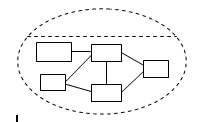 <a onClick="window.open('/olcweb/cgi/pluginpop.cgi?it=jpg::Diagram 1::/sites/dl/free/0077110005/315085/Q4mcq71.JPG','popWin', 'width=NaN,height=NaN,resizable,scrollbars');" href="#"><img valign="absmiddle" height="16" width="16" border="0" src="/olcweb/styles/shared/linkicons/image.gif">Diagram 1 (11.0K)</a>Diagram 1 <a onClick="window.open('/olcweb/cgi/pluginpop.cgi?it=jpg::Diagram 1::/sites/dl/free/0077110005/315085/Q4mcq71.JPG','popWin', 'width=NaN,height=NaN,resizable,scrollbars');" href="#"><img valign="absmiddle" height="16" width="16" border="0" src="/olcweb/styles/shared/linkicons/image.gif">Diagram 1 (11.0K)</a>Diagram 1 |
| | B) | 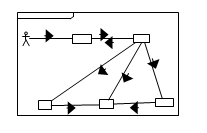 <a onClick="window.open('/olcweb/cgi/pluginpop.cgi?it=jpg::Diagram2::/sites/dl/free/0077110005/315085/Q4mcq72.JPG','popWin', 'width=NaN,height=NaN,resizable,scrollbars');" href="#"><img valign="absmiddle" height="16" width="16" border="0" src="/olcweb/styles/shared/linkicons/image.gif">Diagram2 (11.0K)</a>Diagram2 <a onClick="window.open('/olcweb/cgi/pluginpop.cgi?it=jpg::Diagram2::/sites/dl/free/0077110005/315085/Q4mcq72.JPG','popWin', 'width=NaN,height=NaN,resizable,scrollbars');" href="#"><img valign="absmiddle" height="16" width="16" border="0" src="/olcweb/styles/shared/linkicons/image.gif">Diagram2 (11.0K)</a>Diagram2 |
| | C) | 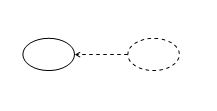 <a onClick="window.open('/olcweb/cgi/pluginpop.cgi?it=jpg::Diagram 3::/sites/dl/free/0077110005/315085/Q4mcq73.JPG','popWin', 'width=NaN,height=NaN,resizable,scrollbars');" href="#"><img valign="absmiddle" height="16" width="16" border="0" src="/olcweb/styles/shared/linkicons/image.gif">Diagram 3 (9.0K)</a>Diagram 3 <a onClick="window.open('/olcweb/cgi/pluginpop.cgi?it=jpg::Diagram 3::/sites/dl/free/0077110005/315085/Q4mcq73.JPG','popWin', 'width=NaN,height=NaN,resizable,scrollbars');" href="#"><img valign="absmiddle" height="16" width="16" border="0" src="/olcweb/styles/shared/linkicons/image.gif">Diagram 3 (9.0K)</a>Diagram 3 |
|
|
5 | |
Which of these is the correct set of USDP analysis class stereotypes? |
| | A) | Interface, control and entity. |
| | B) | Boundary, control and entity. |
| | C) | Interface, sequence and entity. |
|
|
6 | |
One of the following is not an advantage of stereotyping analysis classes. Which one? |
| | A) | The resulting packages can form a basis for the system’s architecture. |
| | B) | It can be useful to differentiate classes that have broad similarities in the way that they behave. |
| | C) | Once a class is stereotyped, its behaviour is likely to become more predictable. |
|
|
7 | |
What do boundary classes represent? |
| | A) | Customers and suppliers of the business. |
| | B) | People who will use the system. |
| | C) | Interfaces between the system and its actors. |
|
|
8 | |
What is the significance of the double colon in the class name: User Interface::AddAdvertUI? |
| | A) | The class called AddAdvertUI is in the package called User Interface. |
| | B) | User Interface is the stereotype of a class called AddAdvertUI. |
| | C) | User Interface and AddAdvertUI are two alternative names for the same class. |
|
|
9 | |
Which one of these is not a permitted symbol for a boundary class? |
| | A) | 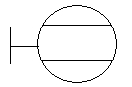 <a onClick="window.open('/olcweb/cgi/pluginpop.cgi?it=jpg::Symbol 1::/sites/dl/free/0077110005/315085/Q9mcq71.JPG','popWin', 'width=NaN,height=NaN,resizable,scrollbars');" href="#"><img valign="absmiddle" height="16" width="16" border="0" src="/olcweb/styles/shared/linkicons/image.gif">Symbol 1 (4.0K)</a>Symbol 1 <a onClick="window.open('/olcweb/cgi/pluginpop.cgi?it=jpg::Symbol 1::/sites/dl/free/0077110005/315085/Q9mcq71.JPG','popWin', 'width=NaN,height=NaN,resizable,scrollbars');" href="#"><img valign="absmiddle" height="16" width="16" border="0" src="/olcweb/styles/shared/linkicons/image.gif">Symbol 1 (4.0K)</a>Symbol 1 |
| | B) | 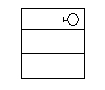 <a onClick="window.open('/olcweb/cgi/pluginpop.cgi?it=jpg::Symbol 2::/sites/dl/free/0077110005/315085/Q9mcq72.JPG','popWin', 'width=NaN,height=NaN,resizable,scrollbars');" href="#"><img valign="absmiddle" height="16" width="16" border="0" src="/olcweb/styles/shared/linkicons/image.gif">Symbol 2 (3.0K)</a>Symbol 2 <a onClick="window.open('/olcweb/cgi/pluginpop.cgi?it=jpg::Symbol 2::/sites/dl/free/0077110005/315085/Q9mcq72.JPG','popWin', 'width=NaN,height=NaN,resizable,scrollbars');" href="#"><img valign="absmiddle" height="16" width="16" border="0" src="/olcweb/styles/shared/linkicons/image.gif">Symbol 2 (3.0K)</a>Symbol 2 |
| | C) | 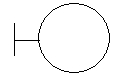 <a onClick="window.open('/olcweb/cgi/pluginpop.cgi?it=jpg::Symbol 3::/sites/dl/free/0077110005/315085/Q9mcq73.JPG','popWin', 'width=NaN,height=NaN,resizable,scrollbars');" href="#"><img valign="absmiddle" height="16" width="16" border="0" src="/olcweb/styles/shared/linkicons/image.gif">Symbol 3 (4.0K)</a>Symbol 3 <a onClick="window.open('/olcweb/cgi/pluginpop.cgi?it=jpg::Symbol 3::/sites/dl/free/0077110005/315085/Q9mcq73.JPG','popWin', 'width=NaN,height=NaN,resizable,scrollbars');" href="#"><img valign="absmiddle" height="16" width="16" border="0" src="/olcweb/styles/shared/linkicons/image.gif">Symbol 3 (4.0K)</a>Symbol 3 |
|
|
10 | |
What are entity classes? |
| | A) | Classes that contain data. |
| | B) | Classes that contain persistent data. |
| | C) | Classes that represent something or some concept in the application domain. |
|
|
11 | |
One of these is not a permitted symbol for an entity class. Which one? |
| | A) | 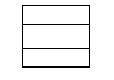 <a onClick="window.open('/olcweb/cgi/pluginpop.cgi?it=jpg::Symbol 1::/sites/dl/free/0077110005/315085/Q11mcq71.JPG','popWin', 'width=NaN,height=NaN,resizable,scrollbars');" href="#"><img valign="absmiddle" height="16" width="16" border="0" src="/olcweb/styles/shared/linkicons/image.gif">Symbol 1 (2.0K)</a>Symbol 1 <a onClick="window.open('/olcweb/cgi/pluginpop.cgi?it=jpg::Symbol 1::/sites/dl/free/0077110005/315085/Q11mcq71.JPG','popWin', 'width=NaN,height=NaN,resizable,scrollbars');" href="#"><img valign="absmiddle" height="16" width="16" border="0" src="/olcweb/styles/shared/linkicons/image.gif">Symbol 1 (2.0K)</a>Symbol 1 |
| | B) | 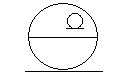 <a onClick="window.open('/olcweb/cgi/pluginpop.cgi?it=jpg::Symbol 2::/sites/dl/free/0077110005/315085/Q11mcq72.JPG','popWin', 'width=NaN,height=NaN,resizable,scrollbars');" href="#"><img valign="absmiddle" height="16" width="16" border="0" src="/olcweb/styles/shared/linkicons/image.gif">Symbol 2 (5.0K)</a>Symbol 2 <a onClick="window.open('/olcweb/cgi/pluginpop.cgi?it=jpg::Symbol 2::/sites/dl/free/0077110005/315085/Q11mcq72.JPG','popWin', 'width=NaN,height=NaN,resizable,scrollbars');" href="#"><img valign="absmiddle" height="16" width="16" border="0" src="/olcweb/styles/shared/linkicons/image.gif">Symbol 2 (5.0K)</a>Symbol 2 |
| | C) | 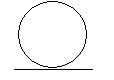 <a onClick="window.open('/olcweb/cgi/pluginpop.cgi?it=jpg::Symbol 3::/sites/dl/free/0077110005/315085/Q11mcq73.JPG','popWin', 'width=NaN,height=NaN,resizable,scrollbars');" href="#"><img valign="absmiddle" height="16" width="16" border="0" src="/olcweb/styles/shared/linkicons/image.gif">Symbol 3 (3.0K)</a>Symbol 3 <a onClick="window.open('/olcweb/cgi/pluginpop.cgi?it=jpg::Symbol 3::/sites/dl/free/0077110005/315085/Q11mcq73.JPG','popWin', 'width=NaN,height=NaN,resizable,scrollbars');" href="#"><img valign="absmiddle" height="16" width="16" border="0" src="/olcweb/styles/shared/linkicons/image.gif">Symbol 3 (3.0K)</a>Symbol 3 |
|
|
12 | |
What do control classes represent? |
| | A) | The calculation and scheduling aspects of the logic of the use case. |
| | B) | Classes that interact with the users of the system. |
| | C) | Classes that control the storage of persistent data. |
|
|
13 | |
One of the following cannot directly affect the state of an object. Which one? |
| | A) | A change in the value of one of its attributes. |
| | B) | The creation or destruction of another object of the same class. |
| | C) | The creation or destruction of a link with another object. |
|
|
14 | |
What is the difference between a link and an association? |
| | A) | A link connects two instances, while an association connects two classes. |
| | B) | A link is a transient association. |
| | C) | A link is an association between two entity classes. |
|
|
15 | |
What is the significance of the multiplicity of an association? |
| | A) | It denotes the number of different classes that can be linked together. |
| | B) | It constrains the number of objects of one participating class that can be linked to an object of the other class. |
| | C) | It constrains the number of times that an object of one participating class can be linked during its lifetime. |
|
|
16 | |
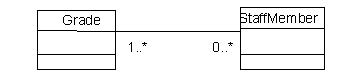
Which of the following answers is the correct interpretation of the association multiplicities shown on this diagram?
 <a onClick="window.open('/olcweb/cgi/pluginpop.cgi?it=jpg::Diagram::/sites/dl/free/0077110005/315085/Q16mcq7.JPG','popWin', 'width=NaN,height=NaN,resizable,scrollbars');" href="#"><img valign="absmiddle" height="16" width="16" border="0" src="/olcweb/styles/shared/linkicons/image.gif">Diagram (9.0K)</a>Diagram <a onClick="window.open('/olcweb/cgi/pluginpop.cgi?it=jpg::Diagram::/sites/dl/free/0077110005/315085/Q16mcq7.JPG','popWin', 'width=NaN,height=NaN,resizable,scrollbars');" href="#"><img valign="absmiddle" height="16" width="16" border="0" src="/olcweb/styles/shared/linkicons/image.gif">Diagram (9.0K)</a>Diagram
|
| | A) | A staff member need not be associated with any grades, or it can be associated with an indeterminate number of grades; a grade must be associated with one or more staff members. |
| | B) | A grade cannot be associated with a staff member but a staff member can be associated with a grade. |
| | C) | A grade need not be associated with any staff members, or it can be associated with an indeterminate number of staff members; a staff member must be associated with one or more grades. |
|
|
17 | |
How do operations differ from methods? |
| | A) | A method is a particular implementation of an operation. |
| | B) | An operation is a particular implementation of a method. |
| | C) | Some object-oriented programming languages have methods, while others have operations. |
|
|
18 | |
When do we not need to represent the whole system as a class in the analysis model? |
| | A) | When the users have not stated that this is a requirement. |
| | B) | When the system does not need to interact directly with other systems. |
| | C) | When the system does not need to encapsulate data or behaviour that applies only to the system as a whole. |
|
|
19 | |
What is a domain class model? |
| | A) | A class model that does not include either boundary or control classes. |
| | B) | An analysis class model that is independent of any particular use cases. |
| | C) | A class model that has been implemented in a particular domain. |
|
|
20 | |
One of the following is a bad guideline for deciding the class where an operation should be located. Which one? |
| | A) | The operation represents a service that objects of that class should provide to objects of other classes. |
| | B) | The operation needs to access or update data that is stored in another class that has an association with that class. |
| | C) | The operation needs to access or update data that is stored in an attribute of that class. |
|
|
21 | |
What is the main purpose of the Class–Responsibility–Collaboration technique? |
| | A) | To decide which team members will be responsible for developing each part of the software. |
| | B) | To decide which classes of the system should be responsible for each use case. |
| | C) | To decide how responsibilities should be distributed among the classes of the system. |
|
|
22 | |
Why is it often difficult to determine the most appropriate choice of responsibilities for each class? |
| | A) | Because there may be several alternatives that appear equally justified. |
| | B) | Because the developers may not know enough about how the users want the system to be designed. |
| | C) | Because members of the development team are often lazy and avoid responsibility as much as they can. |
|
|
23 | |
The requirements of different use cases may suggest different operations for the same class. How do we resolve this? |
| | A) | We should split the class so that there is one for each use case, and model each class with the particular operations required for its use case. |
| | B) | We should include in the class all the operations that are suggested by all the use cases. |
| | C) | We should model the class with only that subset of operations that applies to all use cases. |
|
|
24 | |
Which of the following is an advantage of the use of a control class in realizing a use case? |
| | A) | A control class prevents users from being able to change the way that the entity classes work. |
| | B) | A control class reduces the need for entity classes to know anything about other entity classes unless this is directly relevant to their own responsibilities. |
| | C) | A control class allows the system to communicate with other systems on different networks. |
|